From Evening Dress to Overalls: Where Locals, Night Owls, and Travellers Stand Side by Side
At the Viennese Würstelstand, an unwritten rule of absolute equality prevails — bridging classes, cultures, and walks of life. At two in the morning, opera-goers in evening dress lean against the very same ledge as off-duty taxi drivers, club revellers, and travellers with wheeled suitcases gazing in awe at the steaming display. While the Viennese regular orders in swift, time-honoured local shorthand, first-time visitors point curiously at the sizzle of the griddle, welcomed with dry humour and patient guidance on the difference between an Eitrige and a Burenwurst. There is no divide between high society and working folk, nor between locals and guests: under the warm glow of the kiosk canopy, everyone shares the same cardboard tray, the same dollop of mustard, and the simple pleasure of honest Viennese street food.
The Anatomy of an Order
Ordering here follows a rhythmic choreography of sausage, bread, and condiments. Nobody just orders a plain sausage — the soul of the meal is defined at the edge of the cardboard tray:
Examples of a typical order
- The Eitrige with a Bugl and Schoarfa: Grilled Käsekrainer packed with melted cheese, paired with the crusty end of a dark sourdough loaf (Kantn or Bugl), sharp tarragon mustard, and a crunchy Krokodü (pickled gherkin) or a fiery Oaschpfeiferl (hot pickled chilli).
- A Poar Glatte with Semmel and Kren: Steaming Frankfurters straight from the hot water kettle, served with a crisp Kaisersemmel or Langsemmel roll and a heap of freshly grated horseradish that clears the sinuses.
- The Haaße with G’schissana: Robust, coarse Burenwurst, traditionally matched with a thick slice of caraway sourdough rye and mild, sweet Kremser mustard.
- Bosna in a toasted roll: Spiced bratwurst in a crisp oblong roll, topped with finely diced onions, fresh parsley, and a fragrant blend of curry spices.
What Washes It Down
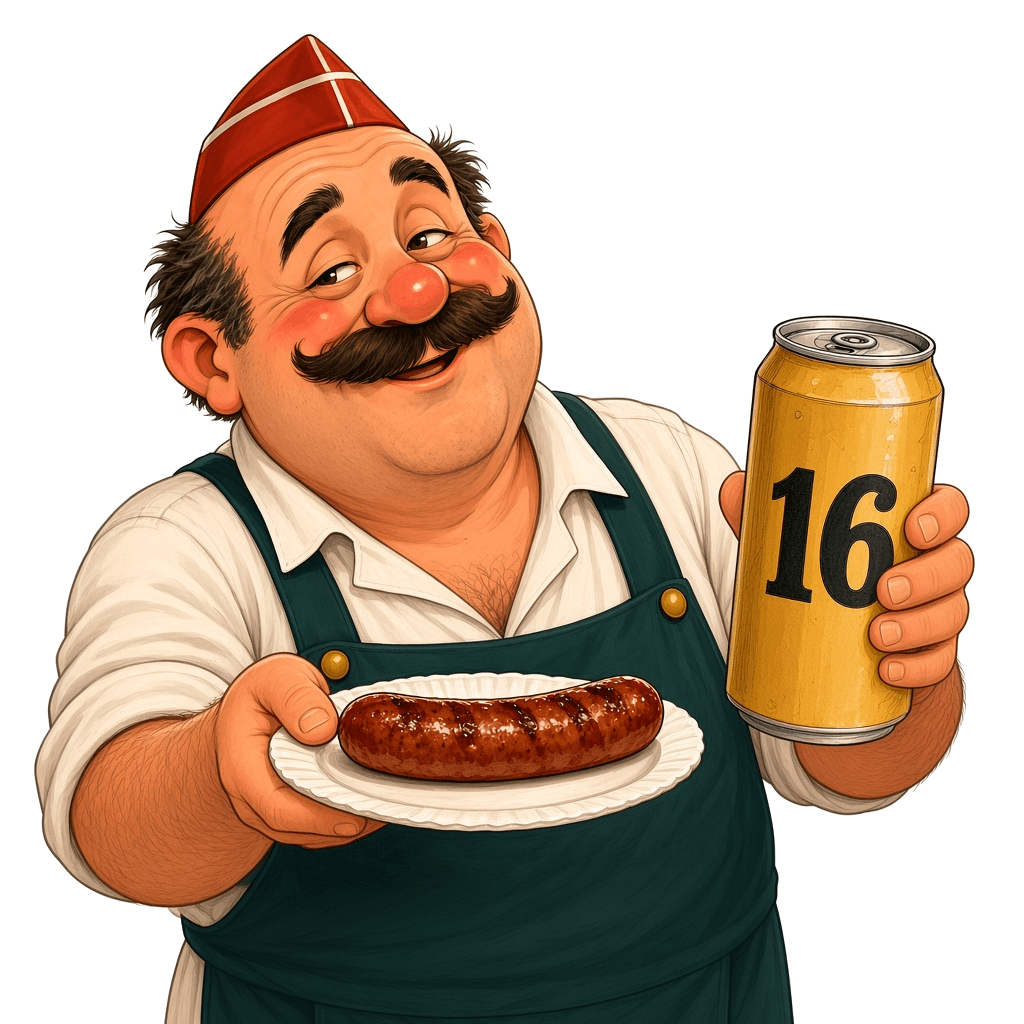
Beer is almost never pulled from a tap at a Viennese stand. It is popped from an ice-cold can — affectionately known as a Blechweckerl, most famously the 16er Blech from the Ottakring brewery — or handed over as a chilled bottle. For a lighter sip, locals reach for a refreshing Weißer Spritzer (wine with sparkling soda) or iconic soft drinks like herbal Almdudler. At landmark kiosks by the opera house, chilled champagne is poured into proper flutes alongside midnight Käsekrainer. And as a final digestif before heading home, a miniature bottle of Jägermeister or local Leibwächter herbal bitters provides the traditional send-off.